

The global textile and advertising printing market is rapidly shifting toward high-volume, stable production systems. In this transformation, the dye sublimation dual spray printer has become a key technology direction.
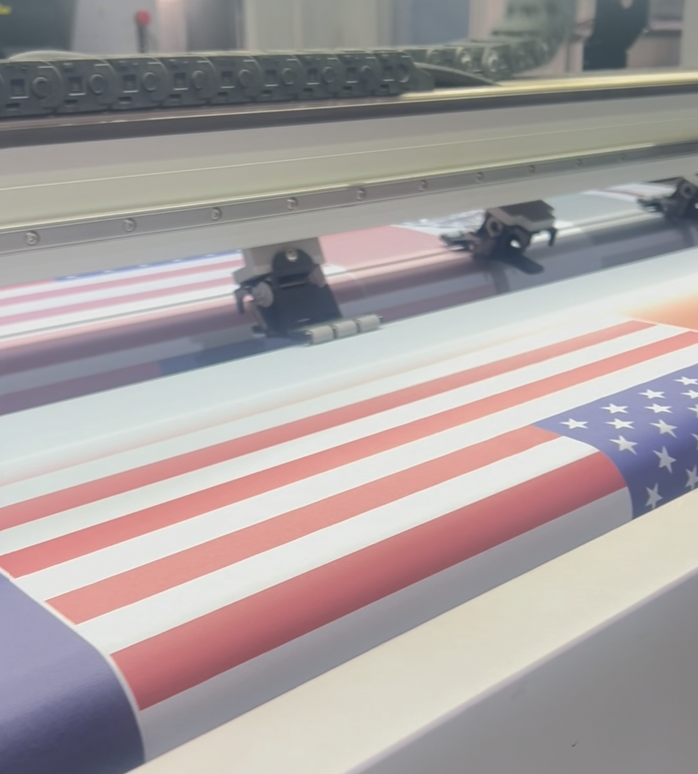
A true dual spray system is not just two printheads working simultaneously. It is a coordinated industrial architecture involving:
This ensures stable output even under high-speed production conditions.
Single head systems often face:
In contrast, industrial dye sublimation printer systems with dual synchronization reduce workload per head, improving:
Modern systems often integrate Epson I3200 sublimation printer technology, which provides:
Dual spray systems reduce:
This leads to significantly improved uptime in continuous production environments.
Q1: What makes dual spray synchronization different?
It coordinates timing and data flow between printheads.
Q2: Is it suitable for continuous production?
Yes, it is designed for industrial long-run printing.
Q3: Does it improve color accuracy?
Yes, due to balanced ink distribution.
Q4: What industries use it most?
Textile, flags, exhibition graphics.
Q5: Is Epson I3200 necessary?
It is highly recommended for stability and precision.
Dual spray synchronization is not a speed upgrade—it is a structural stability revolution in industrial