

As the textile graphics and advertising display industry continues to evolve, semi-transparent fabrics are becoming one of the fastest-growing materials in commercial printing. From exhibition decorations and retail window displays to interior soft signage and artistic installations, brands increasingly demand lightweight fabrics with smooth color gradients and elegant visual effects.
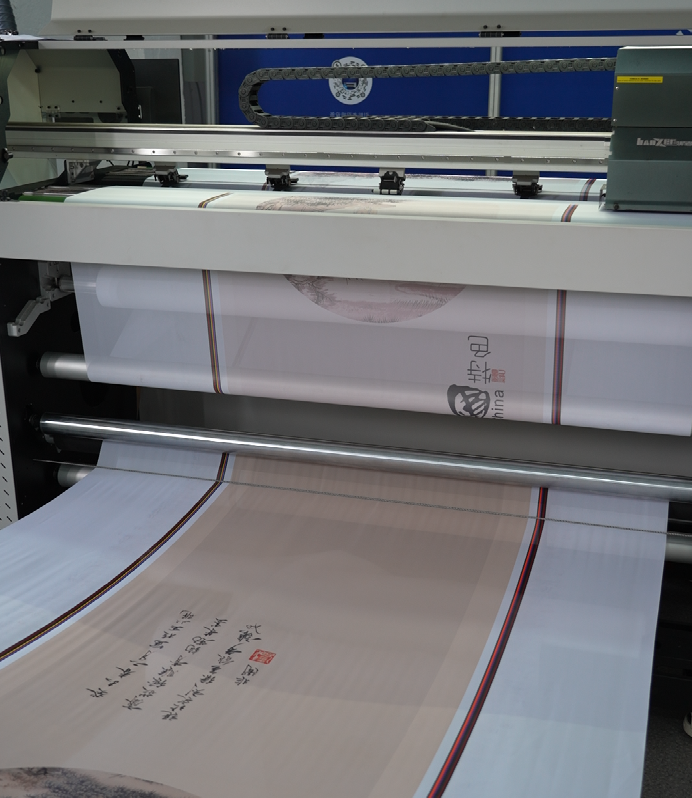
This shift is also driving demand for more advanced production equipment. A modern dye sublimation dual spray printer is no longer just a standard sublimation printer; it has become a critical part of industrial textile production workflows where speed, consistency, and color accuracy directly affect business profitability.
For manufacturers handling large-scale fabric graphics, the combination of dual head technology and high-speed sublimation printing is redefining production efficiency.
Semi-transparent fabrics are visually attractive because they allow soft light transmission while maintaining vivid printed graphics. However, these materials are also more challenging to print compared to traditional polyester fabrics.
Unlike thicker textiles, lightweight translucent fabrics can easily show printing defects if ink distribution is unstable. Common issues include:
A high-quality dual head sublimation printer solves these problems through more precise droplet placement and stable ink delivery systems.
Semi-transparent materials are commonly used in premium visual environments where soft gradients and smooth transitions matter more than heavy saturation.
This is where an advanced high precision sublimation printer provides a significant advantage over older single-head systems.
One of the biggest challenges in textile graphics production is balancing print quality with production speed. Traditional single-head systems often struggle to maintain output consistency during long production runs.
A modern dye sublimation dual spray printer addresses this issue through synchronized dual-head operation.
With dual printheads operating simultaneously, manufacturers can dramatically improve production capacity without sacrificing image quality.
This is especially important for industries such as:
In large-volume production environments, a high speed sublimation printing machine allows businesses to complete urgent orders faster and reduce production bottlenecks.
Higher printing speed also means fewer overnight production shifts and reduced manual intervention. For factories facing rising labor costs, production automation has become a key investment priority.
Today, many industrial textile manufacturers prefer the Epson I3200 sublimation printer platform because of its stability and precise ink control capabilities.
Semi-transparent fabrics require exceptionally smooth gradient transitions. Epson I3200 printheads help achieve:
This is particularly important for luxury retail displays and artistic textile installations.
Industrial printing environments require equipment capable of long production cycles. A reliable continuous sublimation production system must maintain stable output for extended operating hours.
Compared to older printhead technologies, the I3200 platform offers improved:
Many buyers still compare single-head and dual-head systems before making purchasing decisions.
Advantages:
Limitations:
Advantages:
For growing businesses, investing in an industrial dye sublimation printer with dual-head capability often becomes more cost-effective over time.
The market for semi-transparent textile graphics continues to expand across multiple industries.
Modern exhibitions increasingly use translucent fabrics to create layered lighting effects and immersive visual spaces.
Fashion stores and luxury retail brands use lightweight printed fabrics for elegant promotional displays.
Hotels, cafes, art galleries, and commercial spaces use printed translucent fabrics for room dividers and decorative ceiling installations.
Event production companies increasingly rely on large-format translucent textile graphics for stage backdrops and visual effects.
Many businesses initially focus only on equipment price, but long-term operational efficiency is far more important.
A reliable cost effective sublimation printer helps reduce:
In high-volume production environments, stable output quality directly improves customer satisfaction and repeat business opportunities.
Polyester-based fabrics, mesh textiles, semi-transparent fabrics, banners, and soft signage materials are all suitable for sublimation printing.
Dual head systems provide higher production speed, improved efficiency, and better scalability for commercial printing businesses.
Yes. Epson I3200 printheads are widely used in industrial textile printing because of their stability and precise ink control.
Yes. Advanced sublimation systems can produce highly detailed gradients and natural color transitions.
Compared to many traditional textile printing methods, sublimation printing produces lower waste and cleaner production workflows.
As commercial textile graphics continue moving toward lightweight visual materials and immersive display environments, semi-transparent fabric printing is becoming a major growth segment in the advertising and exhibition industry.
To meet increasing production demands, businesses require more than just a standard sublimation printer. They need a stable, scalable, and high-speed dye sublimation dual spray printer capable of maintaining industrial-level output quality over long production cycles.
For companies focused on textile graphics, exhibition displays, and soft signage production, dual-head sublimation technology is quickly becoming the new industry standard.