

The global digital textile printing industry is rapidly shifting toward high-speed industrial production. As customer demand for banners, flags, sportswear, and exhibition graphics continues to grow, manufacturers need equipment that delivers both speed and reliability. This is where the dye sublimation dual spray printer becomes a critical production solution.
Traditional single-head printers often struggle to maintain consistent output during long production cycles. In contrast, modern dye sublimation dual spray printer technology is designed for continuous industrial operation, offering better productivity, smoother gradients, and higher color accuracy.
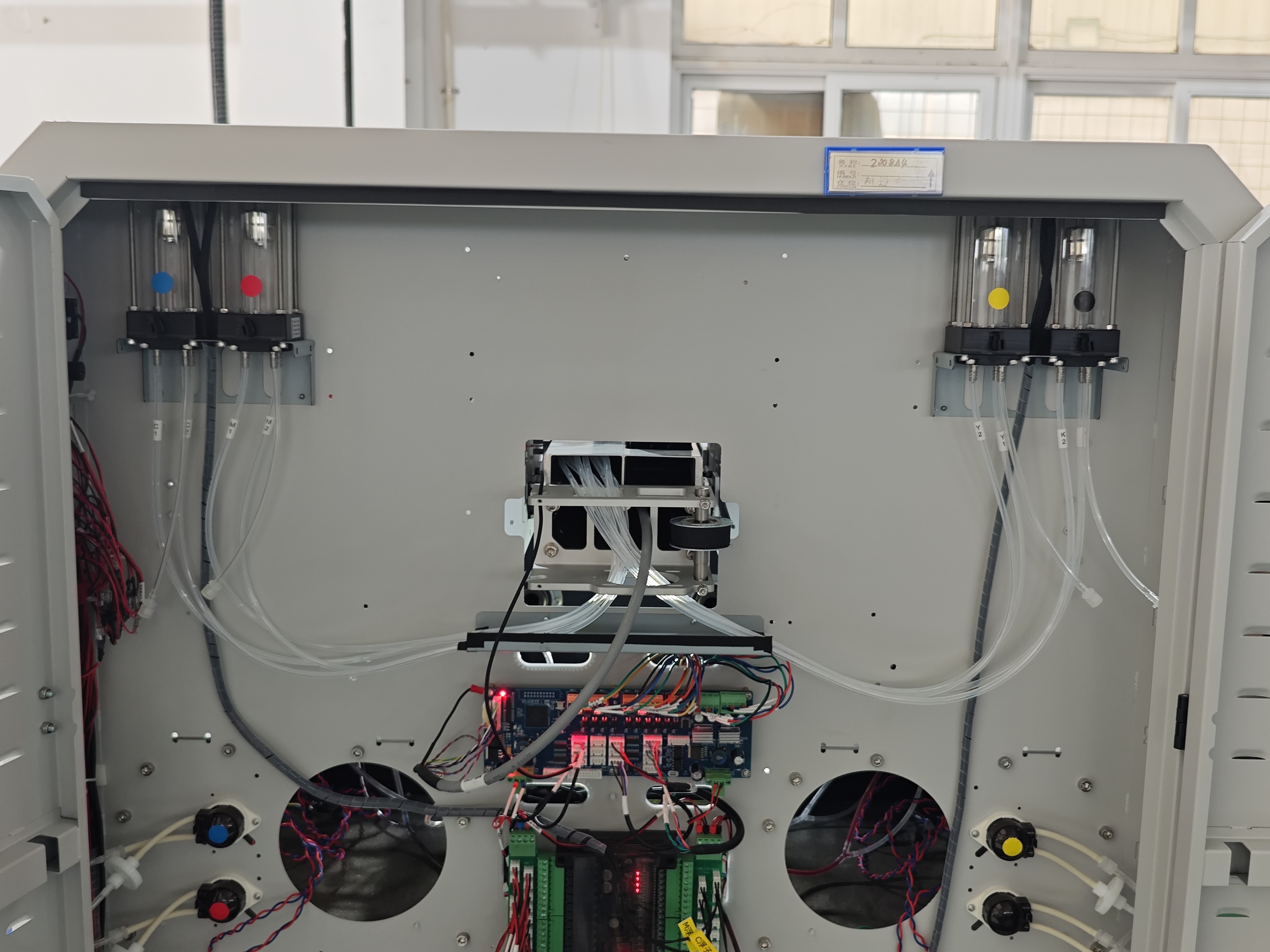
One of the biggest advantages of a high precision dual spray sublimation printer is synchronized dual-head printing. By using two printheads simultaneously, production speed increases significantly without sacrificing image quality.
For industrial users, this means:
Many industrial models now use Epson I3200 printheads because of their precision ink droplet control and high-resolution output capabilities. These printheads are especially suitable for dye sublimation applications that require vibrant colors and smooth transitions.
Compared with traditional single-head systems, a dual head sublimation printing machine performance setup can dramatically improve workflow efficiency in textile and banner production facilities.
Reliable printing performance starts before the printer even leaves the factory. Professional manufacturers conduct multiple pre-shipment tests to ensure machine stability.
These tests often include:
Before printheads are installed, some factories perform no-head fixture testing to evaluate the printer’s movement system. This process helps detect alignment issues, motion instability, and structural vibration problems before shipment.
Depending on customer requirements, manufacturers may also provide:
These procedures are important for reducing installation risks and improving overseas deployment efficiency.
Color consistency is essential in textile and advertising printing. Modern dye sublimation dual spray printer technology uses advanced color management systems together with Epson I3200 printheads to achieve highly accurate image reproduction.
Benefits include:
This is especially important for:
With sublimation ink penetrating directly into polyester fibers, printed products also gain excellent durability and wash resistance.
Industrial users need printers capable of operating for long hours with minimal downtime. A properly engineered dye sublimation dual spray printer can maintain stable output across extended production cycles.
Features that improve industrial stability include:
Continuous production stability is particularly important for factories handling large-volume orders and export contracts.
When comparing dual-head and single-head sublimation printers, the productivity difference becomes clear.
Single-head printers may offer lower initial investment, but they often struggle with:
Meanwhile, dual-head systems offer:
For companies planning long-term expansion, investing in a high precision dual spray sublimation printer can significantly improve operational competitiveness.
As the textile printing and advertising industries continue evolving, industrial-grade sublimation printing technology will remain a major driver of production efficiency and high-quality output worldwide.